Qu’est ce que le traitement autoclave ou imprégnation sous pression?
The preservative (odorless and water-based) is injected under pressure (approximately 8 bars) into the wood. This provides long-lasting protection against rot and attacks from wood-boring insects.
When and why is autoclave treatment used?
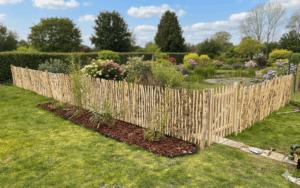
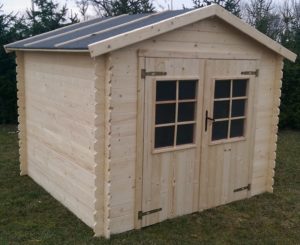
This process is recommended for native softwoods (fir, spruce, pine, etc.), which are not sufficiently resistant to attacks from rot, fungi, and wood-boring insects. It is used for wood in contact with the ground or moisture, such as posts, terraces, avalanche barriers, stabilization structures, utility poles, playgrounds, bridges, structures on shorelines, balconies, etc. (Class 3: not in contact with the ground, for example, facades, noise barriers, visual screening walls).
What are the advantages of autoclave treatment?
Autoclave-treated wood has a lifespan three times longer than that of untreated softwood.
What color is the autoclave treatment?
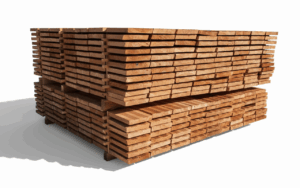
After oxidation and fixing, the wood takes on a slightly green to brown color. The brown tint is obtained by adding a coloring paste. This is not an opaque coating, but a stain with limited penetration. The color after impregnation depends on the drying process, the surface structure, the depth of penetration of the product, and the quality of the wood.
Quels sont les produits utilisés?
Tanalith C (Lonza Group Ltd.)
Korasit CX (Kurt Obermeier GmbH & Co. KG)
Wolmanit CX-10 (Dr. Wolman GmbH, BASF Group)
How should pressure-impregnated products be stored?
Impregnated wood must be stored away from rain and dirt and well ventilated.
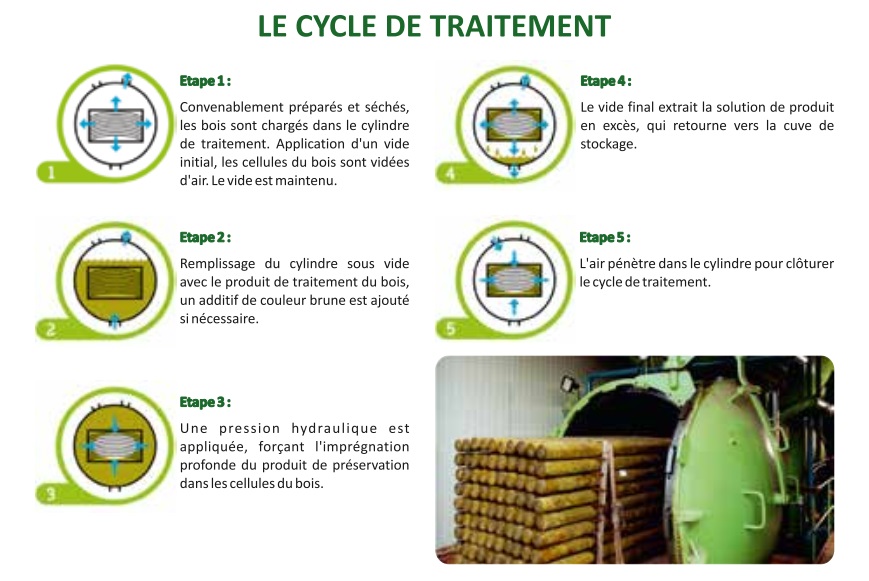
What are the phases of the treatment cycle?
- Étape 1 :
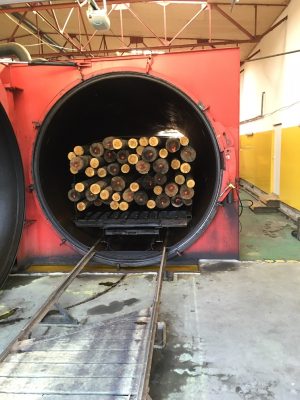
Convenablement préparés et séchés, les bois sont chargés dans le cylindre de traitement. Suite à l’application d’un vide initial, les cellules du bois sont vidées d’air. Le vide est maintenu. - Étape 2 :
Remplissage du cylindre sous vide avec le produit de traitement du bois. Un additif de couleur brune est ajouté si nécessaire. - Étape 3 :
Une pression hydraulique est appliquée, forçant l’imprégnation profonde du produit de préservation dans les cellules du bois. - Étape 4 :
Le vide final extrait la solution de produit en excès, renvoyée vers la cuve de stockage. - Étape 5 :
L’air pénètre dans le cylindre pour clôturer le cycle de traitement.