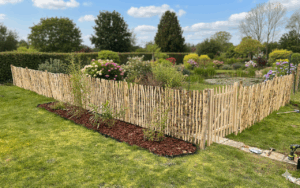
An emblematic coastal fence, the paling fence (ganivelle) is now used far beyond the dunes: marking out parks, protecting plantations, public authority projects. That leaves the choice of species: traditional chestnut, woven hazel or high-durability acacia. Here is the comparison we give our builders' merchant and landscaper customers.
What is a paling fence?
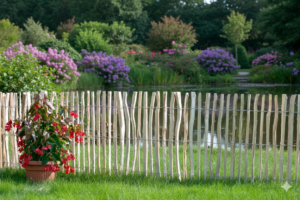
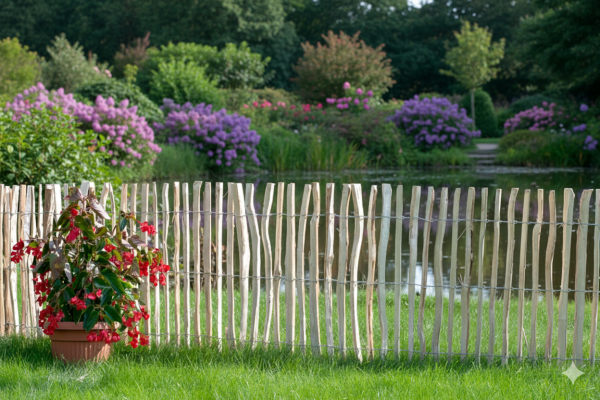
A paling fence (ganivelle) is an open fence made of wooden slats linked by galvanised wire, sold in rolls to be unrolled between stakes. Originally designed to hold dune sand, it is now used to mark out parks, gardens, plantations and natural areas, while letting wind and light through.
Acacia, chestnut or hazel paling fence: the three species at a glance
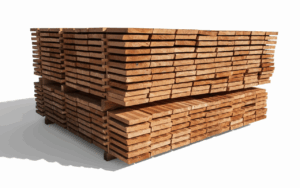
Chestnut is the historical species of the French paling fence: split slats, rustic look, good natural durability. Woven hazel gives the most flexible and most economical paling fence, ideal for temporary or decorative boundaries. Acacia (black locust), the densest of the three, provides maximum durability: it is the choice for exposed sites – seaside, foot traffic, abrasive sand.
Comparison of durability, price and appearance
| Criterion | Acacia | Chestnut | Hazel |
|---|---|---|---|
| Outdoor service life | 20–25 years | 12–15 years | 5–8 years |
| Natural use class | 4 | 3–4 | 3 |
| Price positioning | High | Medium | Economical |
| Appearance | Regular, dense | Rustic, split | Natural weave |
| Recommended use | Coast, high exposure | Tradition, parks | Gardens, events |
Heights and spacings: what we deliver
Our hazel paling fences are available in heights from 0.60 m to 1.50 m, with close spacing (5 cm – windbreak, dune protection) or standard spacing (10 cm – boundaries). For specific heights and lengths for a public tender, our Polish workshop produces to measure.
Installation: two key points
A paling fence holds by its stakes: acacia stakes every 2 to 3 metres, galvanised tension wire top and bottom. In windy areas, reduce the spacing and choose the 5 cm spacing, which filters the wind without blocking it. On stake longevity, see our article service life of an acacia stake.
FAQ
Why consider acacia when tradition favours chestnut?
Because the real cost of a paling fence is its service life. On a coastal site with foot traffic and salt, acacia doubles longevity for a limited extra initial cost. At IBP, acacia is currently used for tension stakes; our paling fences are made of hazel.
What height to protect a dune or a plantation?
1.00 m with 5 cm spacing is the standard for coastal projects; 0.60 m is enough for marking out flower beds.
Do you supply stakes and wire with the paling fence?
Yes: acacia stakes, galvanised wire and matching hazel gates, delivered together on a full truck.
Price your length: send us the length, height and exposure – quotation within 3 days. Request a professional quotation →