"Class 4 autoclave-treated pine": the wording appears on all our product sheets, but what exactly does it guarantee? Use classes, defined by standard EN 335, classify the situations in which wood is exposed to moisture – and therefore the level of protection it needs. Here is how to read them and, above all, how to choose the right class for each structure.
The 5 use classes in one table
| Class | Situation | Examples |
| 1 | Dry interior | Flooring, furniture, panelling |
| 2 | Interior with occasional moisture | Roof structures, sheltered framing |
| 3a / 3b | Exterior, no ground contact | Cladding, ventilated decking boards, pergolas |
| 4 | Permanent contact with the ground or fresh water | Stakes, posts, joists, buried wood |
| 5 | Contact with seawater | Pontoons, harbour structures |
The rule is simple: the longer the wood stays wet, the higher the class. The same pine can be class 2 in a roof structure and require class 4 once driven into the ground.
How pine becomes class 4: autoclave treatment
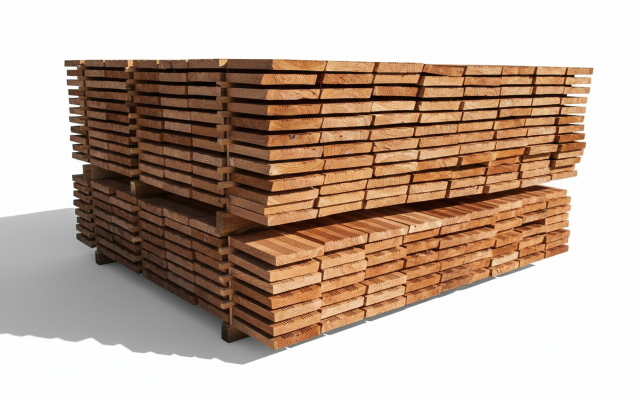
Scots pine is not naturally durable in ground contact. Autoclave treatment impregnates it under vacuum and then under pressure: the preservative penetrates deep into the sapwood, and the wood achieves use class 4. This is the process applied to our peeled stakes, posts and round posts – the process is explained in detail in our article class 4 autoclave-treated Polish pine.
Green or brown finish? It is simply a pigment added to the treatment: the protection is identical, only the colour changes.
Natural class 4: the case of acacia
Some species reach class 4 without any treatment. This is the case of acacia (black locust), whose heartwood is naturally rot-resistant: 20 to 25 years in the ground, as explained in our article service life of an acacia stake. It is the choice for projects where replacement is expensive: livestock farming, vineyards, coastal sites – see our polygonal acacia stakes.
Which class for which structure?
| Structure | Required class | Our range |
| Stake, driven post | 4 | Stakes and round posts (autoclave or acacia) |
| Decking joists | 4 recommended | Class 4 autoclave pine |
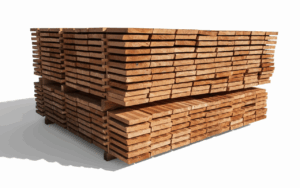
| Ventilated decking boards | 3b minimum | Decking boards in autoclave pine or larch |
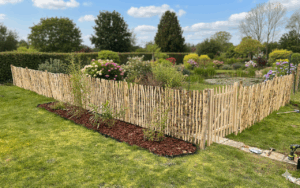
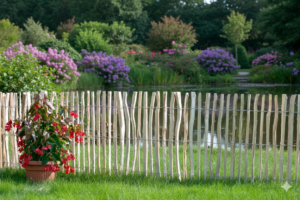
| Above-ground fence, gate | 3 | Wooden fence kits |
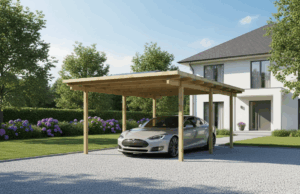
| Carport, pergola | 3 (anchored posts: 4) | Carports, pergolas |
Frequently asked questions
Can class 4 wood still rot?
Yes, if the structure traps water permanently (wood surrounded by compacted, undrained soil, contact with concrete without a break). Class 4 protects under normal conditions of use; good drainage remains wood's best ally.
Note: the use class describes a situation, not a wood quality – "class 4 wood" is wood suitable for that situation, through treatment (autoclave pine) or by nature (acacia).
Is class 4 needed for a deck?
For the boards, properly ventilated and out of ground contact, class 3b is sufficient. For the joists, more exposed to standing moisture, class 4 is strongly recommended.
Is your wood certified?
Yes: our wood comes from sustainably managed forests, certified PEFC & FSC C138138.
Unsure about the use class for your project? Describe the structure, exposure and volumes: professional quotation within 3 days.