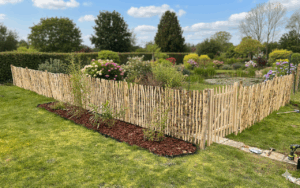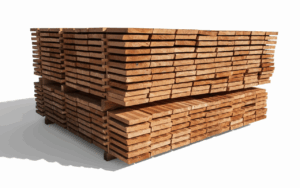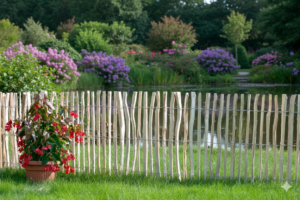
On a fencing project, the question always comes up: how many years before the stakes have to be replaced? With acacia (black locust), the answer comes down to one figure: 20 to 25 years in direct contact with the ground, without any chemical treatment. Here is why this wood has become the reference for landscapers and builders' merchants for stakes, and how it compares with chestnut and autoclave pine.
Why acacia is naturally rot-resistant
Black locust is one of the very few European woods classified in use class 4 in its natural state: its heartwood withstands permanent contact with the ground and moisture without treatment. This durability comes from its high density and its tannins, which protect it from fungi and insects. In practice: no treatment salts, no leaching into the soil, and a wood accepted without reservation on projects in sensitive natural areas (coast, dunes, parks) where treated wood is sometimes prohibited.
Acacia, chestnut or autoclave pine: the in-ground comparison
| Species | Service life in ground contact | Treatment | Typical use |
|---|---|---|---|
| Acacia (black locust) | 20 to 25 years | None – natural class 4 | Fence stakes, paling fences, viticulture, coast |
| Chestnut | 12 to 15 years | None – class 3–4 depending on cut | Split stakes, traditional paling fences |
| Autoclave-treated pine | 10 to 15 years (10-year guarantee) | Class 4 autoclave | Peeled stakes, posts, economical use |
Autoclave pine remains the best price/performance ratio for long runs; acacia is the choice as soon as longevity comes first or the client requires untreated wood.
Which acacia stake for which use?
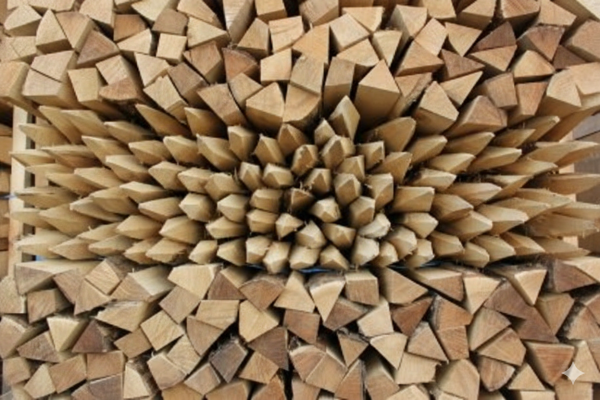
IBP supplies acacia stakes in the usual market cuts: milled polygonal stakes for agricultural and equestrian fencing, stakes and half-stakes for viticulture and paling fences, shaped points ready to drive in. Find the full range in our stakes and round posts category.
How to install an acacia stake so that it lasts: the 4 steps
Even in class 4, installation can gain (or lose) years. On site, four steps are enough:
- Drive rather than set: the point is driven in with a sledgehammer or post driver, without digging a hollow around the ground line where water would collect.
- Drain, never fill with concrete: concrete holds moisture against the wood; a bed of gravel at the bottom of the hole drains better and extends service life.
- Follow the one-third rule: about one third of the length in the ground, two thirds above ground (a 1.20 m fence is installed with a stake of about 1.80 m).
- Adapt the section to the soil: on very wet or loose ground, choose the larger diameter rather than an additional treatment.
Which stake section and length to choose?
It all depends on the load on the fence: light fences and paling fences need only small sections, agricultural and equestrian fences require stronger stakes, and the length is calculated with the one-third-in-the-ground rule. If in doubt between two sections, take the larger one: over 20 years of use, the extra cost is marginal compared with reinstallation. The available cuts (milled polygonal, stakes and half-stakes, shaped points) are detailed in the stakes and round posts category; our team confirms the right section from a simple description of the project.
FAQ
Is an acacia stake really "rot-proof"?
No wood lasts forever, but acacia is the closest thing to it in Europe: its heartwood lasts 20 to 25 years in the ground, whereas most untreated species deteriorate in 5 to 10 years.
Does acacia cost more than autoclave pine?
To buy, yes. Spread over each year of use, the difference is often reversed: half as many replacements and no reinstallation labour.
Do you deliver large quantities?
Yes: IBP delivers builders' merchants and landscapers by full truck from Poland, within 4 to 8 weeks, with PEFC/FSC certified wood.
Need a price for your project quantities? Reply within 3 working days from our French-speaking team. Request a professional quotation →